


Zhongxiang: Your Premier Wastes Recycling Equipment Manufacturer
Professional Team
The company has a standardized factory building of 5,000 square meters, more than 90 workshop workers, 15 sales teams, 12 technical teams, and 8 after-sales service teams.
Perfect Management System
We have a complete factory production, quality supervision system, delivery process and after-sales service system to provide all customers with high-quality products and professional services.
Wide Range of Applications
Our products cover crushers, charcoal machines, wood processing series, etc., which are widely used in mining, metallurgy, building materials, bridges, refractory materials, highways, agriculture, forestry and other industries.
Complete Qualifications
With its strong technical strength and sophisticated processing equipment, the company has passed ISO9001:2008 international quality system certification, as well as PVOC, CE, SGS and other certifications.




Product Categories


Basically, recycling equipment works to compact the recyclable materials or make them smaller, so they take up less space before they are picked up, and so more can be taken away at one time. Recycling equipment also means that the materials will take up less space while they are waiting to be picked up.
We offer you a tailor-made full service, from conceptual design to planning, production, modernisation, optimisation, assembly, start-up, conversions, disassembly, maintenance and servicing of components to complete recycling and sorting systems. You can count on us to find the right solution for all your needs. We offer equipment for recycling various materials like:
- Tire Shredders
- Metal Shredders
- Plastic Shredder
Why Use Zhongxiang Tire Shredding Machine
The Technology of Tire Shredder:
These shredders are designed for making finest crumbs as per user’s choice. Its different types of blades allow users to get the desired size. Tire shredders are combined with safe technology, it requires very small maintenance.
The Method of Recycling:
After collecting the used tires it goes for find aside from the other materials from it. And then it sent to the shredder. Tire shredding machine grabs the materials (which are tire) and pulls this to the cutter. Shredder gives the shape of tires according to its blade. After making air and vibrations the crumbs go out of the shredder. Then the crumbs get ready to recycling. The method by which rubber tires go for recycling is called pyrolysis.
Different Types of Tire Shredders
Since the rubber blend of a tire needs to go through a number of refinement processes before it can be used, each tire shredder machine varies in its internal mechanical design and process. Consider the following common types of tire shredding equipment
Shear Shredders
Shear shredders are typically low-speed and employ two-shaft rotary knives to cut materials.
Chippers
Chippers can be single or multiple-stage contraptions that use high-speed rotary knives, wheels and drums in the process to cut materials into chips.
Grinders
Grinders work on either high or low speed using wheels, drums, and plates in the abrasion process, often combined with compression to crush materials.
Granulators
Granulators vary widely in size and mechanics and employ units that use knives to cut parts into fine particles.
Speciality Shredders
Speciality shredders in the case of tires are designed to forcefully tear the tire into small pieces using rotary shafts at low speeds, under very high torque.
Advantage

High-Torque
Optimized for efficient cutting and shredding of tires without debeading.

Quality Components
Built with high-grade materials to ensure long-term reliability and minimal maintenance.

Applications and Versatility
The tire shredder is not limited to just tire shredding. These versatile units can also handle other materials.

Performance and Reliability
Engineered for high performance, the design minimizes noise, sparking, dust, and heat rise, thereby increasing operational safety.
Advantages of Tire Shredder
Increased Efficiency
Tire shredders can efficiently process large quantities of scrap tires, increasing processing speed and efficiency.
Energy Recovery
Some advanced tire shredders can also shred tires into fuel pellets for energy recovery. These pellets can be used to generate electricity or heating systems, providing renewable energy.
Space Saving
Used tires usually take up a lot of storage space. By using a tire shredder, tires can be effectively reduced in size, thus saving storage and transportation space.
Resource Recycling
Shredded tires can be used for recycling. For example, shredded rubber granules can be used to make new tires, rubber flooring, rubber fenders and other products. This helps to conserve resources and reduce the need for raw materials.
Waste Tire Disposal
Tire shredders can effectively shred and process waste tires, converting them into reusable materials. This helps to solve the environmental problems of waste tire treatment and disposal.
Usage of Tire Shredders
Our line of tire shredders and scrap tire shredding and recycling equipment process a variety of tires:
- Car Tires
- Truck Tires
- Passenger Tires
- Agricultural Tires
- Tractor Tires
- Off Road Tires (OTR)
- Forklift Tires
- Mining Equipment Tires
- Aircraft Tires

How Does a Tire Shredding Machine Work?
Primary Tire Shredders
A primary shredder is the first part of the machine that scrap tires experience. These are generally robust shredders that take whole tires and turn them into 2" to 6" rough shreds. These machines typically process approximately 10 to 30 a great deal of tires or rubber inside an hour. The principal shredder features either 1 shaft or 2 shafts.
The single-shaft shredders are excellent to create uniform pieces. The 2-shaft shredder typically produces rougher shreds, nevertheless the overall shredding process is faster. The 2-shaft shredder is additionally longer-lasting and much more durable.
Granulators, Mills, And Graters
The next step of your process involves the rough tire shreds undergoing the secondary shredder of a tire shredder machine, and this is known as the grater. This procedure refines the tires into chips to sizes of 1" or smaller. Tires also contain steel wire that is certainly filtered out with the secondary shredders.
After passing from the grater, the mulch left out then goes through the granulator. This is a high-speed processing machine that is utilized to get rid of many other materials, including polyester and nylon. This technique produces the material into crumb rubber. This crumb is produced through extremely fine tire-shredding, along with the “crumbs” are around 3/8" in size.
When finer shredding turns into a requirement, the last step that the tire shredding machine will feature will be the milling equipment. The crumb rubber will then be placed right into a fine grinder, or cracker mill, the location where the pieces are further reduced to around 2mm or smaller, which creates a “rubber powder”.
Tire Shredder Maintenance: A Practical Checklist
Remove Leftover Tire Scraps
Sometimes, after being powered down, a tire shredding machine will still have some half-digested tire scraps bouncing around in it. Before doing any other maintenance, it’s best practice to remove these leftovers. They can obscure your ability to see loose screws and clog the machines when starting them back up.
Check The Tool Screws
The tool screw attaches the tire-biting blades to the rotating shaft. They are one of the most likely parts to come loose because the blades are changed regularly, and they are under significant strain as they chew through the tires. Tightening them as needed can prevent costly downtime.
Allow Ventilation
Airflow encourages the heat dissipation. Tire shredder motors work hard ripping apart rubber tires fortified with steel and fiber. Letting the motor cool down will prolong its life.
Test Sharpness
The blades should be inspected frequently to identify when dulling occurs. Blunt blades can cause avoidable damage to other components and slow down tire processing.
Replace Dull Blades
The instructions for how to replace the blades in your equipment should come from the equipment manufacturer. You can usually choose different blade placement depending on how fine or coarse you want the resulting tire scraps to be.
Lubricate Bearings
Almost all big machinery has bearings, and almost all bearings require regular lubrication. Lubrication may not need to be done daily, but at least every week or so. How long bearings stay adequately lubricated depends on use time, the age of the bearings, and the surrounding environmental conditions.
Clean The Area
Removing dust, vagrant tire scrapes, old screws, and other junk from around the tire shredder guarantee a safe working environment. It also helps the engine stay in good condition.
Secure The Shredder
While grinding through tires, shedders can vibrate. Make sure the bolts securing the shredder to the floor are firmly tightened to reduce energy lost through vibration and avoid the worst-case scenario of the shredder moving position.
Adjust The Belt
The conveyor belt that takes tire shreds away from the bottom of the shredder can become slack over time as its rubber pieces rain down. Like the blade replacements, it will only need adjusting periodically, but a regular check will help ensure timely maintenance. It’s best to be on top of these issues than play catch-up when things go wrong.
The Factors to Consider When Selecting a Waste Tire Shredder
Highly efficient tire shredders will usually incorporate mechanisms for separating rubber and steel pieces to create steel-free scrap ready for commercial repurposing. Efficient tire shredders should require little to no maintenance, low-cost part replacements, and boast high levels of uptime and throughput, running on minimal amounts of horsepower. Efficiency may also be calculated based on the ratios of how much tire scrap is input proportional to the amount of usable rubber byproduct produced.
A Shredder That Reduces Operating Costs
You should pick a tire shredder that eliminates most of the hard work for you. Some, but not all, have the ability to separate the rubber from the steel, which can greatly reduce the amount of time and effort required [to recycle tires]. A lot of people want to shred tires to help with the environment, so a shredder that reduces heat and operating costs could be beneficial. Some can even turn the rubber into fine granules, as well as being able to remove almost all tire fiber.
Machine Quality
When it comes to tire shredder, you’ll know the efficiency of one by looking at the machine quality. Depending on the machine quality, your tire shredder will make the recycling process highly efficient—achieving excellent shredding performance and ensuring work continuity.
The Quality of After-Sales Service
Regardless of any equipment, there will be more or less failures that users do not understand in the future production process. Manufacturers with good after-sales service can solve these problems for us as soon as possible, so that the equipment can be put into production smoothly.
Working principle of Metal Shredders
The reduction motor of the scrap metal shredder adopts a directly connected worm gear reducer. The gear motor is directly installed on the driving shaft of the shredder and transmits the power to the driven shaft through the speed change of large and small gears, so as to form a relative movement between the helical tooth cutter disc on the driving shaft and the driven shaft. The spiral tooth cutter discs on the driving shaft and the driven shaft are staggered, so that the materials are squeezed, torn, and sheared at the same time.
Types of Metal Shredders

Single-Shaft Metal Shredders
Single-shaft metal shredders have a rotor and hydraulic ram used to press garbage and scrap against the rotor, which starts the cutting process. Pressure sensors allow the ram to travel backward and forwards, preventing jamming and overheating of the material. Large bulk materials can be broken down into particles as small as 10 mm using these shredders, which can be equipped with various screen sizes.

Double-Shaft Metal Shredders
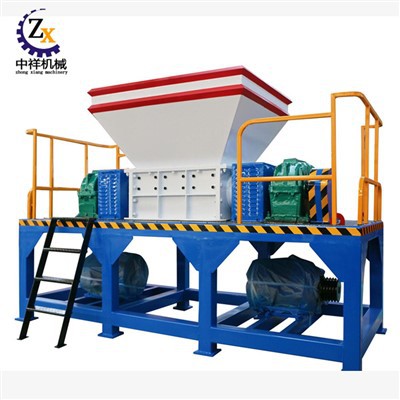
The double-shaft metal shredder is a popular industrial shredder due to its low operating speed, high torque, and high throughput which can effectively treat a variety of materials. Industrial shredders with twin shafts may feature electric motors or hydraulic drives and can process various materials. Double-shaft metal shredders are especially useful for "volumetric reduction" of materials needed to reduce the space that would otherwise be occupied by waste materials.

Three-Shaft Metal Shredders
Three-shaft metal shredders can be utilized independently or as a central component in specialized shredding lines. A three-shaft metal shredder has a cutting system featuring tough rotor blades with a sweeper shaft. In addition, a three-shaft metal shredder’s cutter discs can be replaced individually, while also providing a pivotable screen basket in the middle and protective bulkhead seals for the shaft bearing.

Four-Shaft Metal Shredders
Four-shaft metal shredders have two drive rotors to push the scrap material onto their additional cutting rotors below. Separate gear motors propel these cutting rotors. These additional cutting rotors are used to pre-shred materials before size reduction or additional processing with a granulator. Four-shaft metal shredders are similar in size to twin-shaft shredders and are typically used for waste that cannot be processed by a twin shaft, such as cars.
Salient Features of Metal Shredders
On the basis of the existing metal shredder method and process, the scrap iron shredder improves the crushing power of the equipment, reduces the particle size and improves the product particle size purity.
There are common phenomena such as environmental pollution and material waste in the existing metal equipment process. The scrap iron crusher provided by ZZS for customers has high production efficiency, low price and cost, small limit particle size, good particle size controllability and dispersion, and low secondary pollution. It is an advanced secondary crushing equipment.
Wide range of equipment crushing, scrap iron crushing application and various scrap iron materials: various scrap cars, scrap bicycles and motorcycles, household appliances.
Components of Metal Shredders
Rotor: The rotor on a shredder has teeth cutters that mesh with knives to shred scrap and waste.
Blades: Blades are at the heart of a shredder but must be chosen carefully to fit the material to be shredded since not all blades can be used on all materials. They are made of hardened alloyed steel and may be coated to add to their useful life.
Housing: The housing contains all of the components of the shredder and is made of heavy duty metal.
Motor: The motor on a shredder operates at a slow speed to lessen its stress. The slow rotating speed and high torque allows the shredder to shred a variety of materials.
Power Systems: The two types of shredders are hydraulic and electric. Hydraulic power is better for heavy duty processing and can handle overloads from batch feeding.
Power Systems: The two types of shredders are hydraulic and electric. Hydraulic power is better for heavy duty processing and can handle overloads from batch feeding.
Grabbing: This is the process whereby the shredder takes the material and pulls it down into the cutting blades. Its function is determined by the size and shape of the cutter hook as well as the texture and weight of the material.
Control Systems: With the advancement of technology, modern shredders for industrial use have touch panel control systems that allow for in process adjustments to shredding eliminating the need to access the mechanism to make changes and adjustments.
The Shredding Process of Metal Shredders
Material to be shredded is fed into the shredder. This can be accomplished with a hopper, where material is dropped in from the top or on a conveyor.
The cutting mechanism grabs the material and pulls it through the rotating blades changing large whole materials into small pieces. As the material passes through the shredder, it is cut into shapes of various sizes depending on the material being shredded and the design of the shredder. For some materials, a secondary or granulator may be used to further reduce the size of particles.
Sizing or discharge screens are found on bulk shredders to screen materials and send oversized pieces back through the shredding blades to ensure that it reaches a specific size. Screens are designed to fit the type of material and come in a wide variety of sizes. Shredder screens align with the rotating cutter such that there is an interaction between the cutter and screen.
The process of collecting the shredded materials falls into several categories with a different method for each type of shredding device, shredded material, and ultimate use of the particulates. Some systems have a conveyor system that collects the material to be used as raw material for repurposing. In some systems, the shredded material passes through a granulator to convert it into smaller particles, pellets, or other types of raw material. Other processes may dump the material into a large bin or bale it.
How to Select the Right Scrap Metal Shredders?
Material to be Processed
Generally, different types of scrap metal shredders work well at processing specific types of materials. For instance, shredding cars would require the use of a hammer mill. Primarily, the shears of the machines extrude each other as they shred scrap metals into flakes to meet the requirements. Large-scale scrap metal shredders improve production capacity and crushing efficiency, and have a wide scope of applications. The hard metals that can be processed by scrap metal shredders include steel tiles, paint drums, oil drums, car shells, and motorcycle engine shells.
Cost
The cost of metal shredding machines is affected by various factors. Some of these factors include the size of the crushed material, capacity requirements, and materials to be shredded. Buyers should consider their production requirements and the allocated budget as they acquire metal shredders. Moreover, the cost of potential accessories and maintenance should be taken into account.
Capacity
On an average basis, metal shredders come in various sizes. Huge models can efficiently operate at 10,000 horsepower while shredding up to 4,000 tons of metallic materials a day. Based on the type of material being processed, most metal shredders provide capacities between 1.5 and 3.5 tons per hour and contain a screen that is used to separate the output material. The capacity of a shredder is limited to the size of the cutting chamber. Buyers should carefully check the capacity rating and give allowance for excess capacity.
Desired Output
Buyers should understand the output size requirement to aid in determining the kind of equipment to invest in. The output size is dependent on the thickness of the shafts. Averagely, the output sizes of the treated material range between 50 mm and 80 mm. The output size can be adjusted based on the requirements of the smelting furnaces. It is worth noting that some facilities need scrap metal to be separated whilst others require grinding and re-shredding. Also, compaction equipment may be required in cases where materials have to be reduced to very small sizes.
Usability
Understanding the usability of a scrap metal shredder is of utmost importance. In this case, buyers can determine the amount of metal to be shredded and the frequency of work. The appropriate metal shredding machines should be utilized optimally to eliminate the maximum amount of waste metals in one go. Also, factors like portability, noise, and safety should be considered when selecting a scrap metal shredder. Some materials being processed can be hazardous, for instance, dust and other airborne particles.
Available Space
Buyers should start by selecting a proper location for their shredding tasks. Basically, some shredders are not easy to move because they weigh heavily. For instance, some hammer mills weigh between 250 and 1000 pounds. Buyers should ensure that the size of the scrap metal shredders fits in the spaces where they intend to store them. It is important to measure the dimensions of the equipment before purchasing it. Most metal shredders range between 45*50 m to 120*120 m in size.
Maintenance Tips for Metal Shredder Machine
Within the waste industry, there is a large variety and volume of materials that are introduced and processed in the shredder at a time. Thus, it becomes crucial for shredders to be maintained regularly to make sure they don't break down. The foremost step that you should follow is preventing large downtime by routinely checking and cleaning the shredding chamber. Along with that, replacing and rotating counter knives is also important to ensure optimum performance of the cutters.
Maintain Safety using a Safety Switch
Always follow proper procedures when preparing to access the cutting chamber on your waste shredder. Every shredder consists of an access door leading to the shredding chamber that makes it easier to rotate knives, change screens and clean the rotor. To maintain safety, a safety switch is installed on the machine that prevents turning on the machine when the door is open. It is basically designed to maintain safety during crucial maintenance tasks.
Install a Metal Detector
Installing a metal detector is the best step to prevent the introduction of foreign objects in the waste shredder. It helps to remove the metal pieces that may have gotten inside the system during the pre-sorting process. Though a small piece of technology, a metal detector can make a significant difference in increasing the productivity of your business. Sometimes, a lot of time is wasted in removing foreign objects from the shredder and/or repairing the damage caused by them.
Regular Preventive Maintenance
There is nothing more daunting than an unexpected maintenance emergency. Performing regular preventive maintenance will minimize the chances of an unexpected breakdown. Also, anticipating problems prior will help you to implement measures that will keep your system and operation running smoothly.
Types of Plastic Shredder

Hard Plastic Crusher
Designed to crush and recycle ABS, PE, PP boards, and other plastic plates. It features a rectangular feeding port for the crushing of long strips and can be equipped with a suction fan and storage bucket to create a complete plate crushing and recycling system.

Powerful plastic Shredder
Suitable for crushing plastic products such as ordinary sheets, pipes, profiles, plates, and packaging materials. It features a blade structure between the claw knife and the flat knife and uses sealed bearings to keep the bearings running well for a long time.

Plastic pipe Plastic Crusher
Designed for crushing small and medium-sized plastic pipes, such as PE, PVC, and silicon core pipes. It features a round tube-type feeding port for the crushing of long-shaped pipes and can be equipped with a suction fan and storage barrel to create a complete pipe crushing and recycling system.
Benefits of Using Plastic Shredder in Waste Management
- Plastic shredders help recover waste during different industrial processes like moulding, trimming, and casting.
- Shredded waste is easier to handle or reuse.
- Shredding is also an efficient waste disposal method, and this greatly reduces the cost of recycling for several industries.
- Plastic shredders are also being used to generate revenue by facilities that sell shredded plastic for use as raw material.
- They convert plastic waste into reusable raw materials for manufacturing plastic containers, PET bottles, and PVC products.
- They also help recoup waste disposed of by commercial units.
- When used for shredding important business documents, CDs, and floppies that contain confidential details, plastic shredders help maintain privacy.
- By recycling and repurposing plastic waste, companies can also reduce their carbon footprint and save the environment.

These consistent particles are effective to produce the highest quality plastic products. This is also one of the main advantagesof usingthe plastic waste shredder in recycling industries. So with these unique features, the shredders are very much useful to use in so many industrial applications such as packaging, plastic processing and so on. There are unlimited benefits of using the plastic shredder in business and offices.
Several Tips to Improve the Efficiency of Plastic Shredder
Control the feeding speed of the plastic shredder. When starting the equipment, when the speed reaches the specified standard, start the feeder. When feeding, it is very important to control the speed. It is necessary to ensure a uniform feeding speed, not too fast or too slow.
Ensure the dryness of the material. If the material to be shredded by the plastic shredder is mixed with moisture, the material may be blocked inside the equipment during the shredding process, which will not only affect the production efficiency of the equipment, but may also cause some damage to the plastic shredder equipment. Damage.
It is also very important that the equipment can perform the shredding work smoothly. Therefore, the plastic shredder must be in a flat position so that the equipment can perform the shredding operation stably.
Maintenance Ways for Plastic Crusher
Keep Your Plastic Crusher Machine in Ventilated Place
After the crushing process is done, you need to clean the dust to avoid the accumulation of dirt or dust. After the cleaning process is done, many of you are keeping it in the dark area. But you cannot do this because it will affect the heat dissipation effect of the motor. So it is recommended to keep it in a well-ventilated place. And it is important to turn off motor to improve service life.
Proper Cleaning Before the Second Start
Once completed the first crushing process it is necessary to remove the remaining debris of plastic pellets in the chamber. It has to be done before the second start to reduce the powder discharge of plastic pellets that may affect the crushing quality.
Proper Lubrication
Frequent lubrication in the bearings of the crusher machine to ensure the smoothness between the bearings will make the machine operation better, and reduce the repair/damage of the machine, and also efficiently saves money.
Checking Blade Condition Regularly
The blades are the main significant component in the plastic crusher. If some damage occurs in blades or any defects, the complete crushing of plastics will not be achieved and the plastic crusher may get some defects. The proper maintenance method with regular checking and lubrication is required for the plastic crusher.
Ensuring the Sharpness of the Blades
In order to ensure the sharpness of the blades used in the plastic crusher, the blades should be frequently checked to make the sharpness. This will decrease the unnecessary damage to the other parts of the crusher.
Choosing a Plastic Shredder: Key Considerations for Your Purchase
Capacity and Throughput
Determine the volume of plastic waste you intend to process. Select a shredder with an appropriate capacity and throughput that matches your requirements. Understanding your needs will prevent the machine from being overworked or underutilized.
Material Compatibility
Different plastic shredders are designed for specific types of plastic. Ensure the shredder you choose is compatible with the types and forms of plastic waste you commonly generate. Some shredders may struggle with certain materials, so verify that the machine can handle the diversity of your plastic waste.
Cutting Mechanism
Plastic shredders employ various cutting mechanisms, such as single-shaft, double-shaft, or even granulators. Research and choose the cutting mechanism that aligns with your processing goals. Consider factors like the size and consistency of shredded output.
Safety Features
Prioritize safety features to protect operators and prevent accidents. Look for safety interlocks, emergency stop buttons, and other features that adhere to safety standards. A safe working environment is crucial when dealing with heavy machinery.
Maintenance and Durability
Assess the ease of maintenance and the overall durability of the shredder. A machine that requires minimal maintenance and is built to withstand continuous operation will provide a more cost-effective and reliable solution in the long run.
Energy Efficiency
Consider the energy consumption of the plastic shredder. Opt for a machine that balances power with efficiency to minimize operating costs and reduce environmental impact.
Size and Space Requirements
Evaluate the available space in your facility and choose a shredder that fits within those constraints. Additionally, ensure that the machine’s size allows for convenient loading and unloading of plastic waste.
Budget Considerations
Establish a budget for your plastic shredder and stick to it. Compare prices, features, and reviews to find a machine that offers the best value for your investment. Remember that a well-chosen shredder can contribute to long-term cost savings.
We have a complete factory production, quality supervision and delivery.


Our Certificate
At present, the company has ISO9001:2008 international quality system certification, as well as PVOC, CE, SGS, and other certifications.


Ultimate FAQ Guide to Wastes Recycling
Q: What is recycling equipment?
Q: What equipment is used for recycling?
Recycling sorting machine / Separators.
Recycling Universal Shredder FRX / cross-flow shredder.
Crushers.
Baling presses.
Conveyor belts.
Reel splitters.
Pulpers / vertical pulping.
Q: What is the meaning of waste recycling?
Q: What are the benefits of recycling machines?
Cost Savings.
Energy Savings.
Improved Efficiency.
Reduced Landfill Space.
Improved Public Image.
Q: What is the purpose of a shredder?
A paper shredder is a mechanical device used to cut sheets of paper into either strips or fine particles. Government organizations, businesses, and private individuals use shredders to destroy private, confidential, or otherwise sensitive documents.
Q: What are the benefits of waste shredders?
Reducing the pressure on the Earth's natural resources.
Q: What are the different types of waste shredders?
Q: What is organic waste shredder?
Q: How do waste shredders work?
Q: What is a metal shredder used for?
Q: How powerful are metal shredders?
Q: Can shredder shred metal?
Q: How does a industrial shredder work?
Q: What is the difference between a commercial shredder and an industrial shredder?
Q: What speed does a plastic shredder run at?
Waste Plastic Shredder With Rotation Speed 85 to 85 (r/min) is equipment used to reduce plastic into tiny pieces for granulation.
Q: Why do we need to shred plastic?
Q: How does a plastic shredder work?
Q: What are the benefits of plastic shredder?
Q: Where are plastic shredders used?
Q: Is there a shredder that can shred cardboard?
Q: Will a wood chipper shred cardboard?
As one of the leading wastes recycling manufacturers in China, we warmly welcome you to buy high-grade wastes recycling for sale here from our factory. All our products are with high quality and competitive price.
tertiary cone crusher, Corn Drying Machine, best dough mixer 2020